
Gravity die casting vs. sand casting
Two processes, two economics. The decision is driven by volume, alloy, tolerance and how much machining you are willing to pay for afterwards.
How each one actually works
Gravity die casting
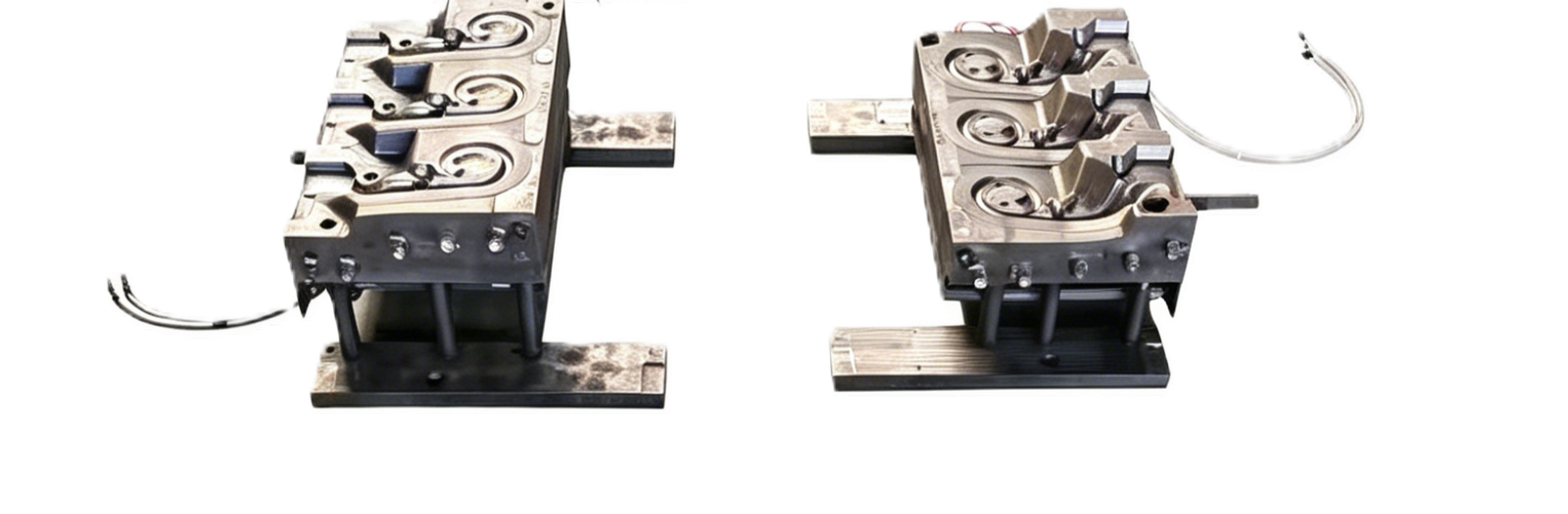
Molten metal is poured into a reusable steel or cast iron die and fills under its own weight — no external pressure. The die is opened, the casting is ejected, and the same die is used again for the next shot.
- Die survives tens of thousands of shots
- Fast, repeatable cycle once running
- Sand cores still form internal passages
- Tilting versions reduce turbulence further
Sand casting
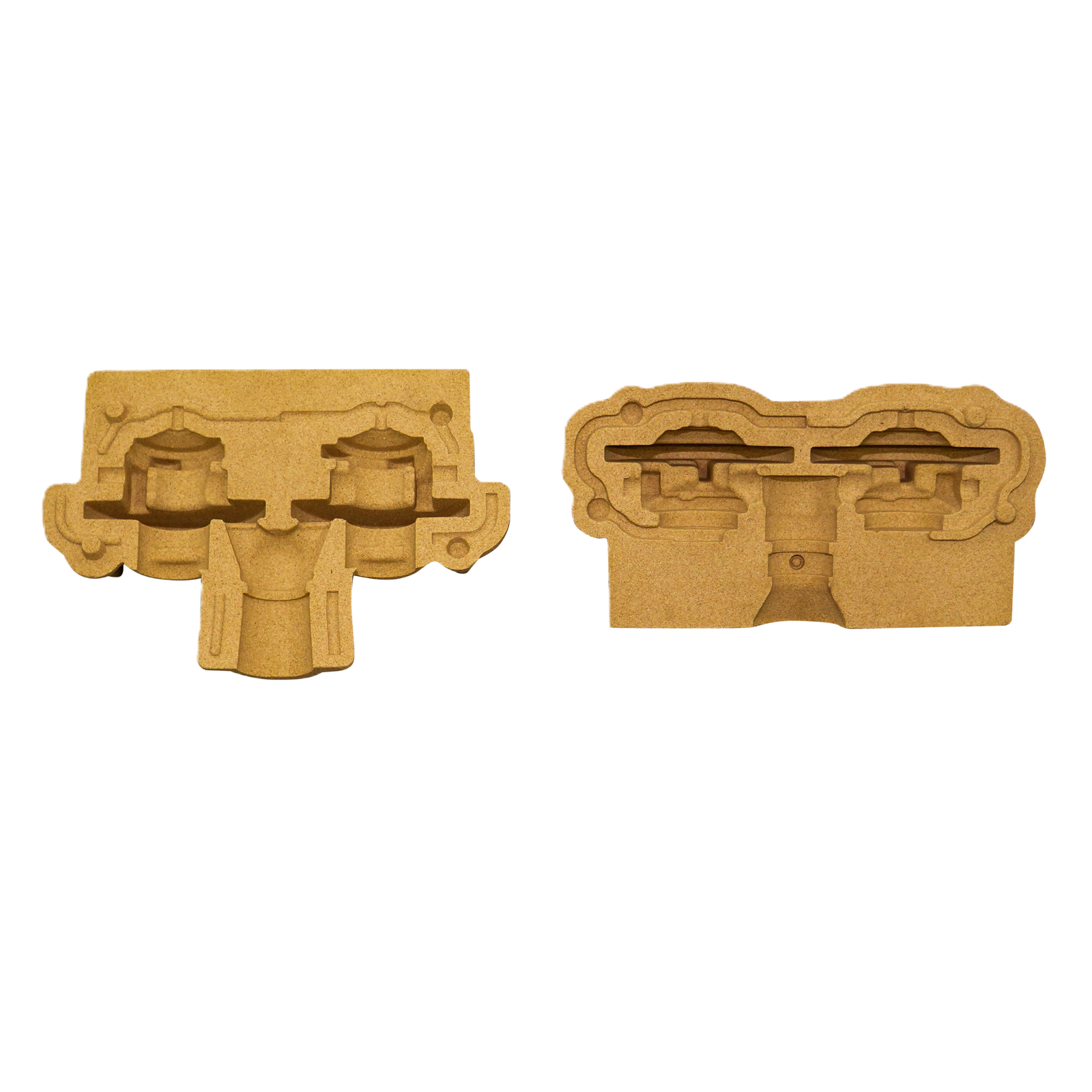
A mould is formed in bonded sand around a pattern, metal is poured, and the mould is broken away to release the casting. Each casting needs a fresh mould; the sand is reclaimed and reused.
- Pattern is far cheaper than a metal die
- Almost no limit on part size
- Handles high-melting-point alloys
- Complex internal shapes via shell or cold box cores
Where the two processes separate
Typical industry ranges — your own figures will shift with alloy, part geometry and foundry practice.
| Factor | Gravity die casting | Sand casting |
|---|---|---|
| Mould | Permanent steel or cast iron die | Expendable bonded sand, destroyed each pour |
| Tooling cost | High upfront | Low — pattern only |
| Economic volume | Medium to high; tooling needs volume to amortise | One-off to high; the only sensible route for prototypes |
| Alloys | Mainly aluminium, magnesium and copper alloys | Almost any alloy, including steel and iron |
| Part size | Small to medium, limited by die and handling | Small to very large — multi-tonne castings are routine |
| Dimensional tolerance | Tighter — roughly ±0.3–0.6 mm typical | Wider — roughly ±0.8–1.5 mm typical |
| Surface finish | Smooth, around 1.6–6.3 µm Ra | Rougher, around 6.3–25 µm Ra |
| Mechanical properties | Denser structure, finer grain from faster cooling in the metal die | Slower cooling, coarser grain, generally lower density |
| Machining allowance | Low — often near net shape | Higher — more stock to remove and more finishing work |
| Lead time to first part | Longer — the die must be designed and cut | Short — patterns are quick and cheap to make |
The honest pros and cons
Gravity die casting
- Excellent surface finish and dimensional repeatability
- Dense structure with good mechanical properties
- Near net shape, so less machining downstream
- Fast, consistent cycle once the die is proven
- Very low cost per part at volume
- High upfront tooling investment
- Limited to lower-melting-point alloys
- Size and geometry constrained by the die
- Long lead time to the first casting
- Uneconomic for prototypes or small batches
Sand casting
- Very low tooling cost and fast pattern turnaround
- Handles steel, iron and other high-melting alloys
- Effectively no upper limit on part size
- Highly complex internal passages via cores
- Viable from a single part upwards
- Rougher surface and wider tolerances
- More machining stock and finishing labour
- Lower density and more porosity risk
- A new mould for every single casting
- Slower output rate per mould line
Which parts belong in which process
Choose gravity die casting when…
- Annual volume is high enough to amortise a die
- The alloy is aluminium, magnesium or a copper alloy
- Surface finish and tight tolerance matter
- You want to minimise downstream machining
- The part repeats unchanged for years
Choose sand casting when…
- Volume is low, or it is a prototype or spare
- The alloy is steel, iron or another high-melting metal
- The casting is large or heavy
- Internal geometry is complex and core-driven
- The design is still changing between batches
Choosing between gravity die casting and sand casting?
Share your alloy, annual volume, part size and tolerance requirements. DRATEC can help you select the process and equipment that fits the finished-part economics.
Request a Quote